_1758712576.png?x-oss-process=image/format,webp "banner")


_1770833610.jpg?x-oss-process=image/format,webp/resize,l_48)
_1770833610.jpg?x-oss-process=image/format,webp/resize,l_48)

Key Features

Laminated Veneer Lumber (LVL) is a high-strength, engineered wood product created by bonding thin wood veneers under heat and pressure, offering superior stability and load-bearing capacity compared to solid timber. Used extensively in structural construction (beams, rafters) and scaffolding, LVL planks are lightweight, durable, and resistant to warping.
Introduction to LVL Wooden Planks
Composition: Made from thin layers of wood veneer (softwood like pine or spruce) aligned in the same direction and bonded with strong adhesive, typically phenolic resin, to ensure durability and water resistance.
Performance: Offers superior strength-to-weight ratio, high load-bearing capacity, and minimal shrinking or warping, making it a reliable alternative to traditional lumber.
- Safety & Standardization: Engineered to meet strict international standards, ensuring consistent quality and high safety levels in building applications.
LVL is versatile and used across various sectors:
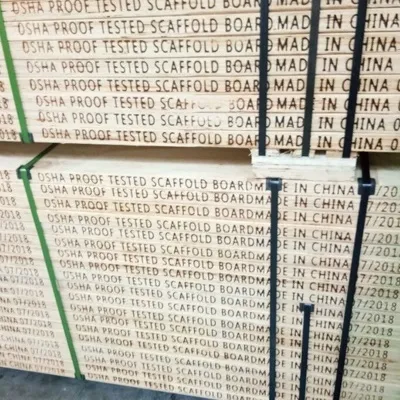
Scaffolding & Work Platforms: Used as non-modular scaffold planks for safe, stable working surfaces in construction, including ringlock, cuplock, and kwikstage systems.
Structural Construction: Utilized as beams, headers, rafters, studs, and trusses in both residential and commercial buildings.
Formwork: Employed as structural supports for concrete, holding wet concrete slabs securely.
- Other Applications: Used in truck bed decking, road signposts, and marine panels.
Durability: Resistant to bending and high durability in various weather conditions.
Efficiency: Can be produced in long, custom lengths and is easy to handle.
Safety: The laminated structure prevents large, hidden defects, increasing reliability.